Most Travel Neck Pillows Are Bad. These Five Are Not.
Neck pillow travel picks that earn their space: my top pick, a wrap-style runner-up, the packable one, and who should skip each, checked on live brand pages.
Buy the Comrad Knee-High. It is the 15-20 mmHg sock I reach for on a long flight, it does not look like a hospital garment under trousers or with shorts, and Comrad sells it directly for 34 dollars, a price I checked on their page while writing this. If your risk is higher, your calves are wider, your budget is tighter, or you want wool instead of nylon, one of the five alternates below is your pick instead.
I want to be honest about this category before you spend anything. For a healthy person on a short flight, compression socks are a comfort item, not a medical necessity. The American Heart Association put it plainly: a vascular specialist told them the socks are fine to use, but science “can’t say exactly how much they might help” an ordinary traveler, and the American Society of Hematology does not recommend them for low-risk flyers on short flights. What they reliably do is push blood up out of your legs so it pools less, which means less of that tight, swollen, sausage-foot feeling when you land. That is the promise. Anyone selling you more than that is overselling. The picks below come from tested reviews and each brand’s own current page, which I checked live.
Some links here are affiliate links, which means Intastravel may earn a commission if you buy through them. It does not change which products we pick or what we say about them.

Four things decide it, and the brand name is the least of them.
Compression level comes first. Socks are rated in millimeters of mercury, the same unit as blood pressure. A podiatrist told Forbes the ladder runs mild at 8 to 15 mmHg, moderate at 15 to 20, firm at 20 to 30, and extra firm above that. For a healthy flyer, 15-20 mmHg is the range worth starting in, enough graduated support to fight swelling without feeling like a tourniquet. Step up to 20-30 only if a long-haul is your normal or your risk is higher, and read the last section before you do.
Graduated fit comes second. A real compression sock is tightest at the ankle and eases as it climbs, because that is what nudges blood back toward your heart. Every pick here is graduated. One warning from a Stanford vascular doctor: if a knee-high runs a little long, do not roll the top down, because that bunched band acts like a tourniquet at exactly the wrong spot.
Fabric comes third, and it is mostly a comfort call. Nylon blends are thin and pack to nothing. Merino wool regulates temperature and resists odor on a long flight, but it can itch sensitive skin.
Sizing honesty comes last. The single most common complaint is a calf band that digs in or a too-small pair that will not go on. If your calves are wider than average, buy the wide option on purpose. A sock you scrunch down does nothing.
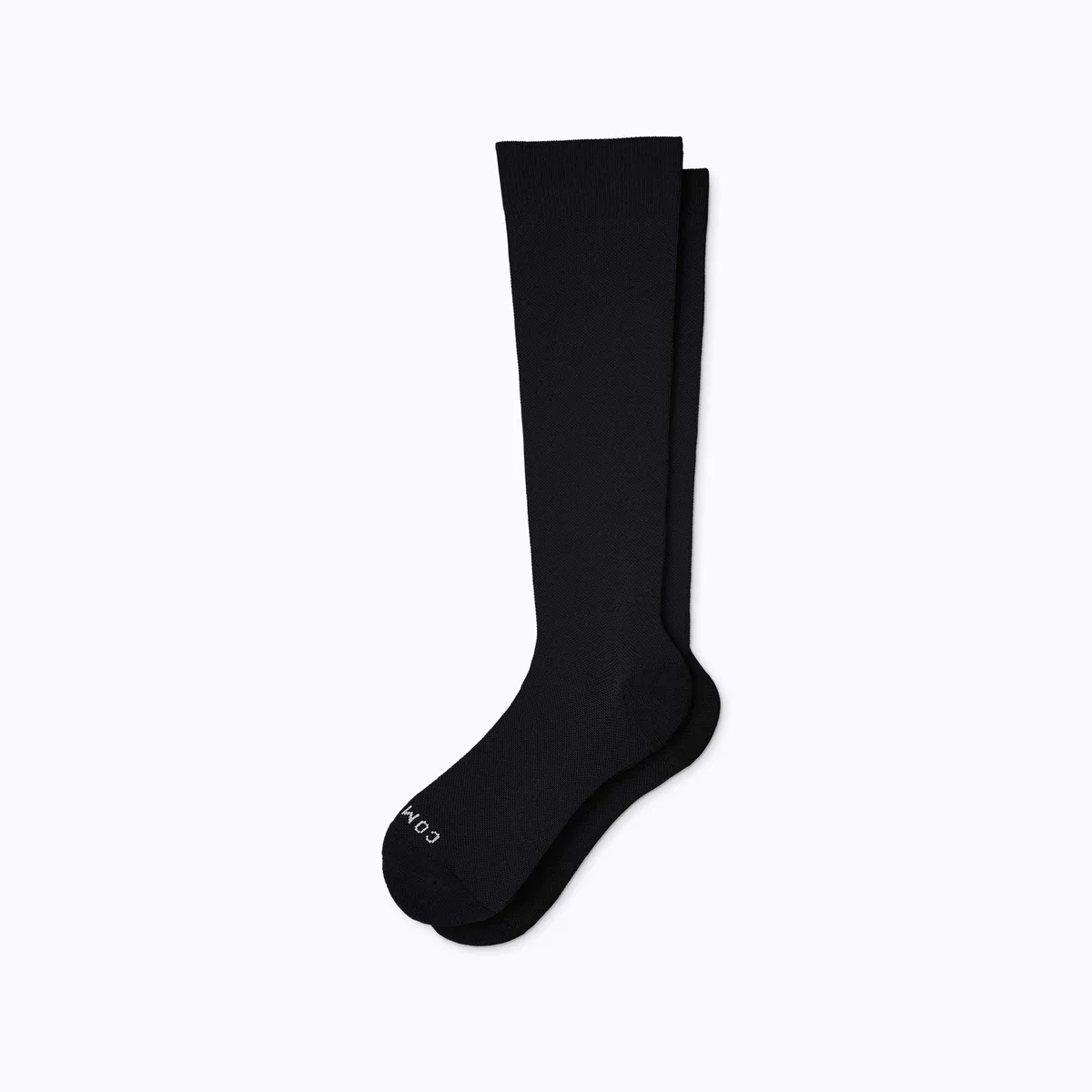
Photo: Comrad
The Comrad wins because it gets the boring things right. The compression is 15-20 mmHg, the level a healthy flyer actually wants rather than the higher numbers that sound more serious and feel like a vise. Comrad lists true graduated compression, tightest at the ankle, and the nylon knit is thin enough that the pair disappears into a carry-on pocket. In a solid color it passes for an ordinary sock under trousers, which matters when you land and keep them on to walk off the swelling.
The honest trade-off: it is a single pair for 34 dollars, which is not cheap next to a bag of eight from a budget brand. You are paying for a nicer knit and a fit that holds its shape after washing. If you want a week of socks for the price of two Comrads, the Charmking below is the sane choice.
Buy it if you are a healthy traveler who wants one good pair at the right compression level and does not want to look like they raided a pharmacy. That is most people, and this is the one I hand them.
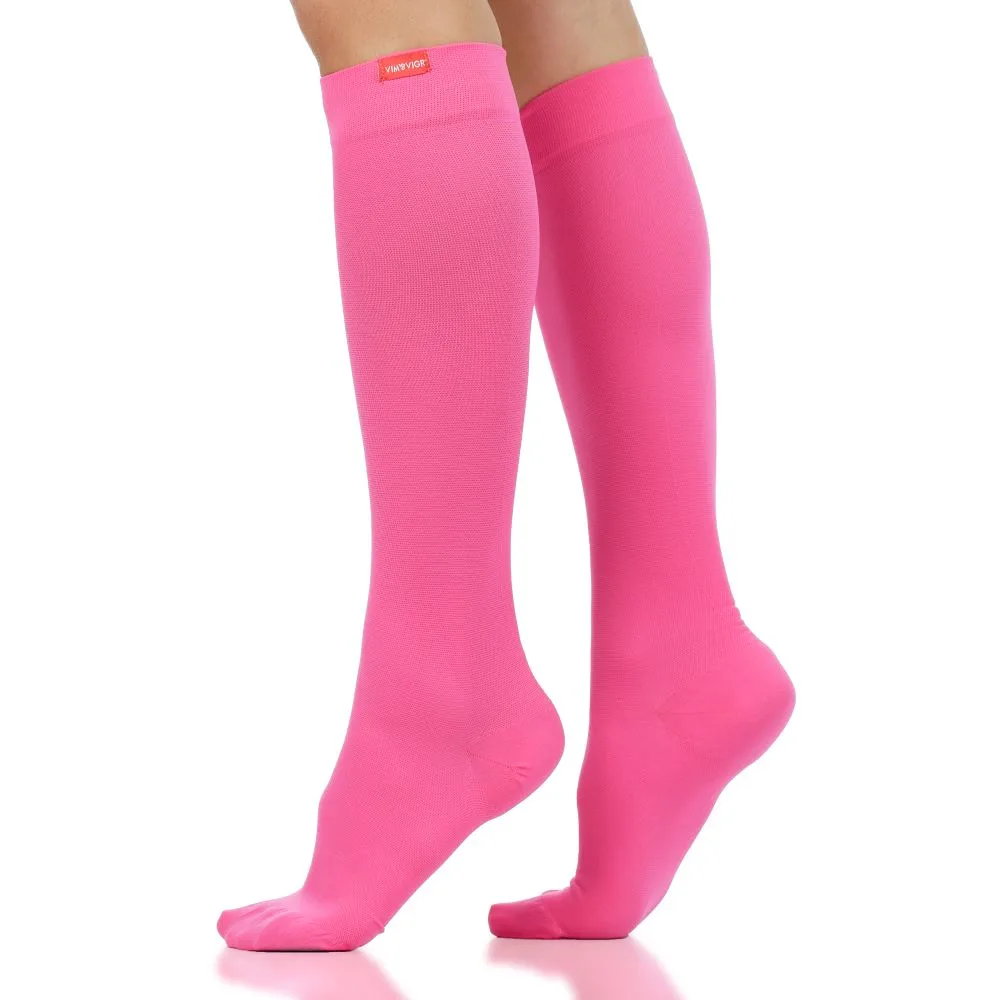
Photo: Vim & Vigr
If a doctor has pointed you toward firmer compression, or your normal flight is ten hours and up, this is the pick. Vim & Vigr sells its Solid Moisture-Wick Nylon in 15-20, 20-30, and 30-40 mmHg, so you can choose the 20-30 firm level on the same product page, and it lists for 44 dollars. The nylon is thin and moves sweat, which you want when a firmer sock is working harder against your leg for a long stretch.
The honest trade-off: 20-30 mmHg is a lot of squeeze for a healthy person, and not the range to buy on a whim. A tester at Pack Hacker found Vim & Vigr’s wool version made their calves tingle around the 40-minute mark, and any firm sock is more likely to pinch if the fit is off. Firmer is not better by default. It is better for a specific reason.
Buy it if your doctor recommended 20-30 mmHg or your long-haul routine justifies it. Skip it, and step down to the Comrad, if you are a healthy flyer who just wants less swelling.
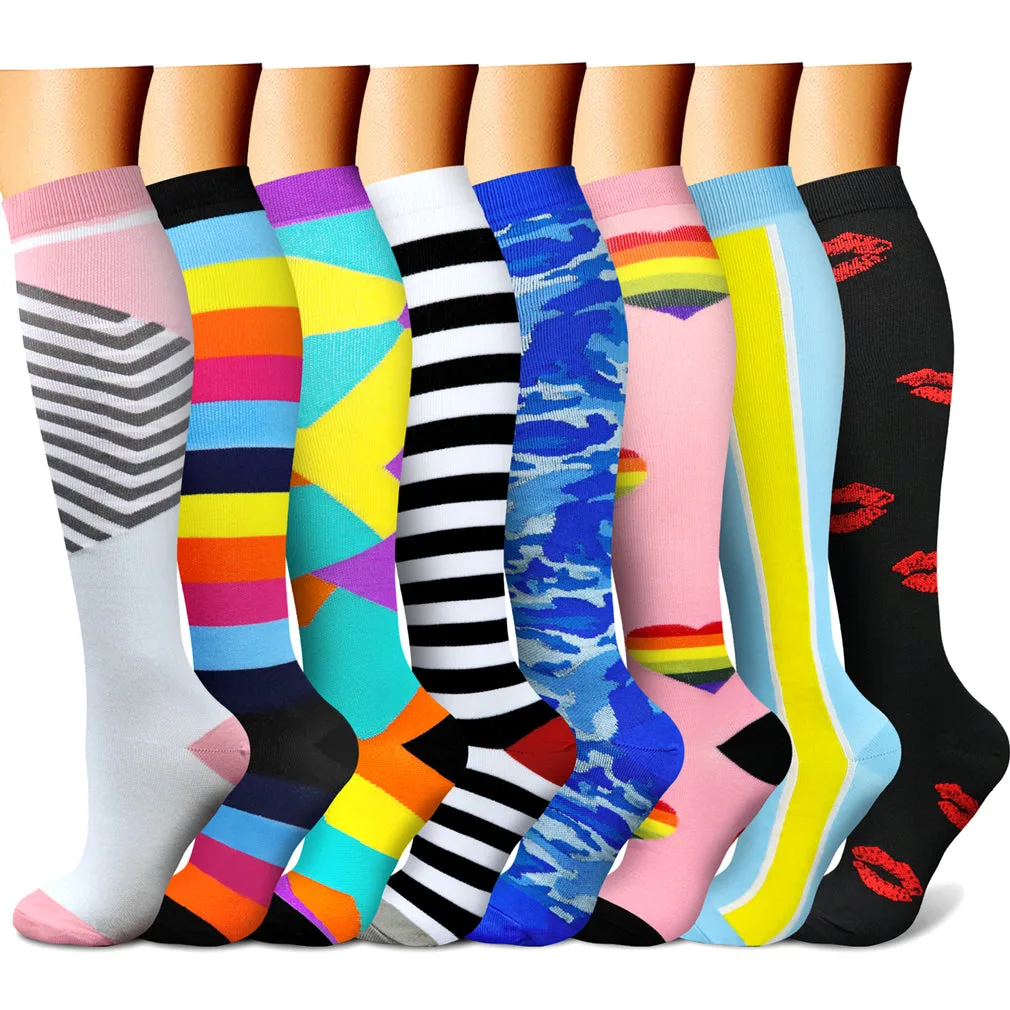
Photo: Charmking
Eight pairs of 15-20 mmHg socks for 26.99 dollars, which is roughly the price of a single pair from the pricier brands. Charmking’s own page lists the same moderate 15-20 range as my top pick and a nylon-heavy knit, and the pack is genuinely useful if you travel often enough to want a clean pair every day without doing laundry. Forbes named this exact eight-pack their budget choice for a reason.
The honest trade-off: you can feel where the money went. The knit is thinner and less structured than the Comrad, the sizing comes in broad S/M and L/XL bands rather than a true fit, and the prints are loud in a way that will not pass as dress socks. A wide-calf traveler should look elsewhere, because these do not come in a generous calf.
Buy it if you want a drawer of cheap, functional compression socks and do not care about looking understated. Skip it if you want one pair that fits precisely and lasts.
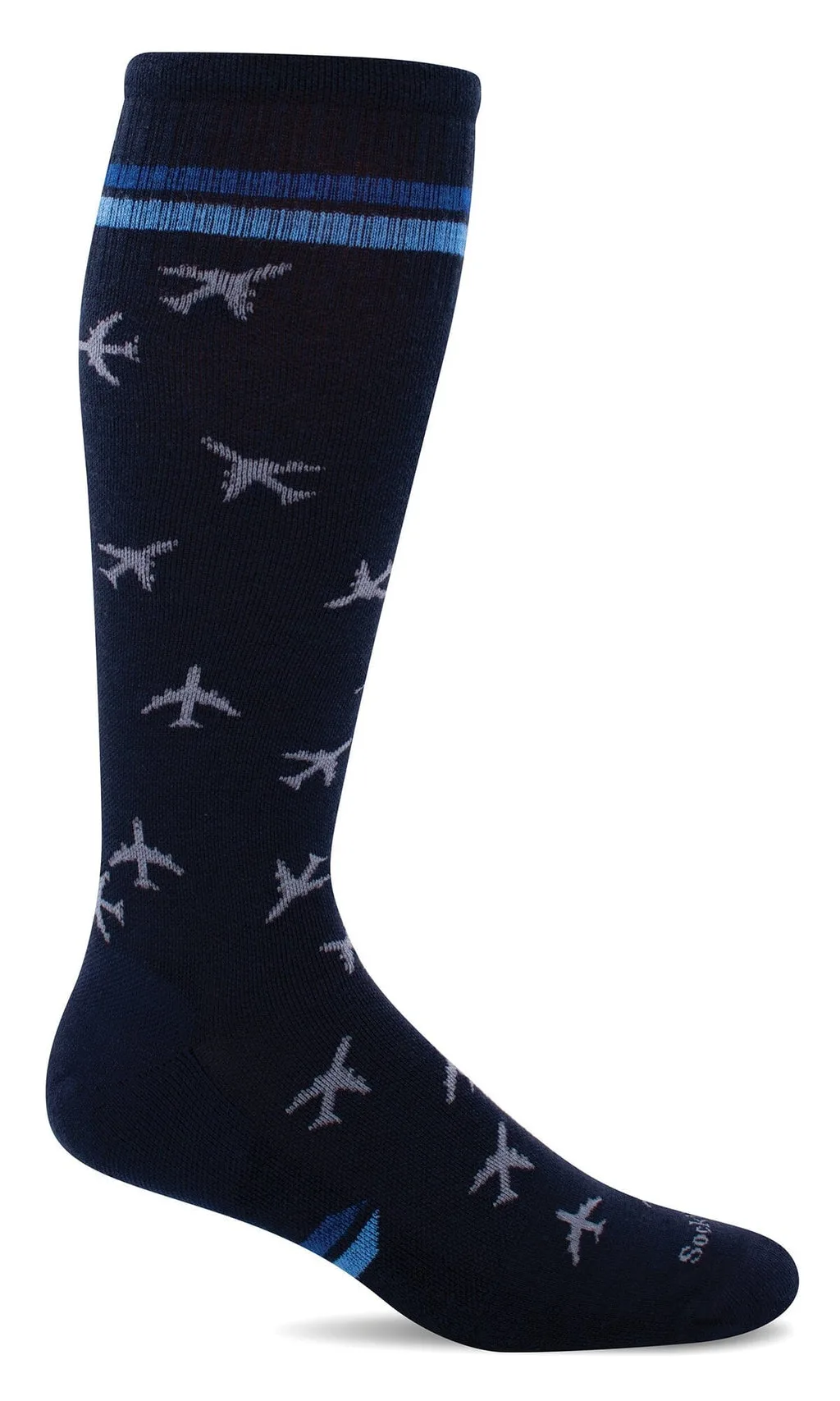
Photo: Sockwell
If your enemy is a cold, dry cabin on a very long flight, wool is the upgrade. Sockwell’s In Flight sock is a 15-20 mmHg graduated knee-high built from 32 percent merino wool with bamboo rayon and stretch nylon, and it lists for 32.95 dollars. Merino regulates temperature and resists odor across a long-haul in a way nylon does not, so your feet stay comfortable rather than clammy. It has arch support, a smooth toe closure, and yes, a small airplane print, which is either charming or beside the point depending on your taste.
The honest trade-off: wool is the reason to buy it and also its weakness. A wool-sensitive tester at Pack Hacker pulled these on and found them itchy right away. If your skin reacts to wool, this is not your sock, and one of the nylon picks will treat you better.
Buy it if you run cold on planes, hate sock odor on long flights, and your skin is fine with merino. Skip it if wool makes you itch.
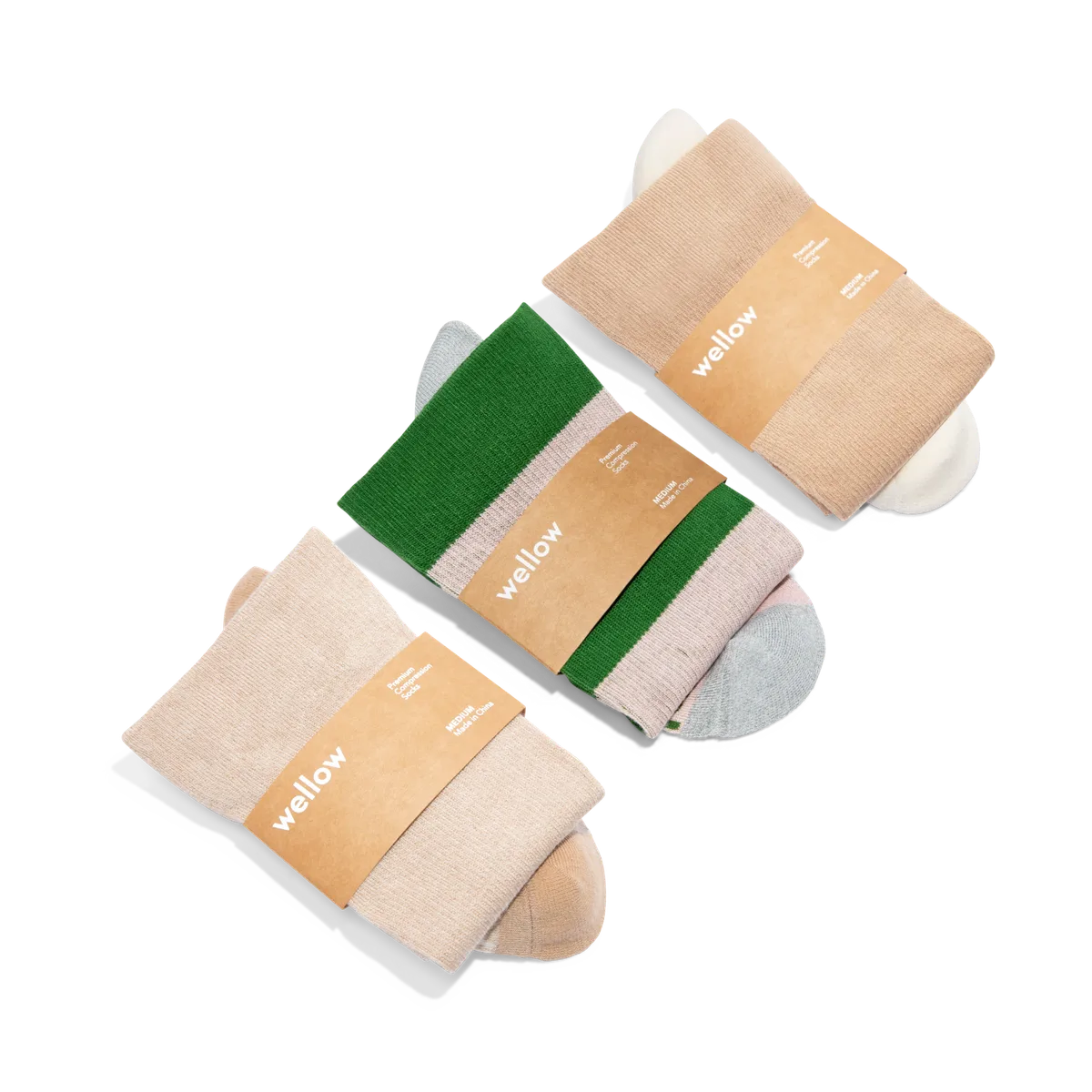
Photo: Wellow
Most compression socks fail wider calves the same way: the band cuts in, so you scrunch it down, and a scrunched sock does nothing. Wellow builds a wide-calf version that fits a calf from 18 up to 22 inches, in a soft viscose made from bamboo, at 18-25 mmHg. A tester at Pack Hacker with wider legs found it cozier than a standard sock without pinching, which is the point of buying the right shape instead of forcing the wrong one.
The honest trade-off: the wide-calf sets sell mainly in three-packs, so the entry cost is 98.97 dollars for three pairs rather than a single cheap pair to test the water. The 18-25 mmHg rating also sits oddly between the standard 15-20 and 20-30 tiers, a touch firmer than the moderate socks here.
Buy it if standard compression socks cut into your calves and you are tired of rolling them down. Skip it if a regular sock already fits you and you only want one pair.
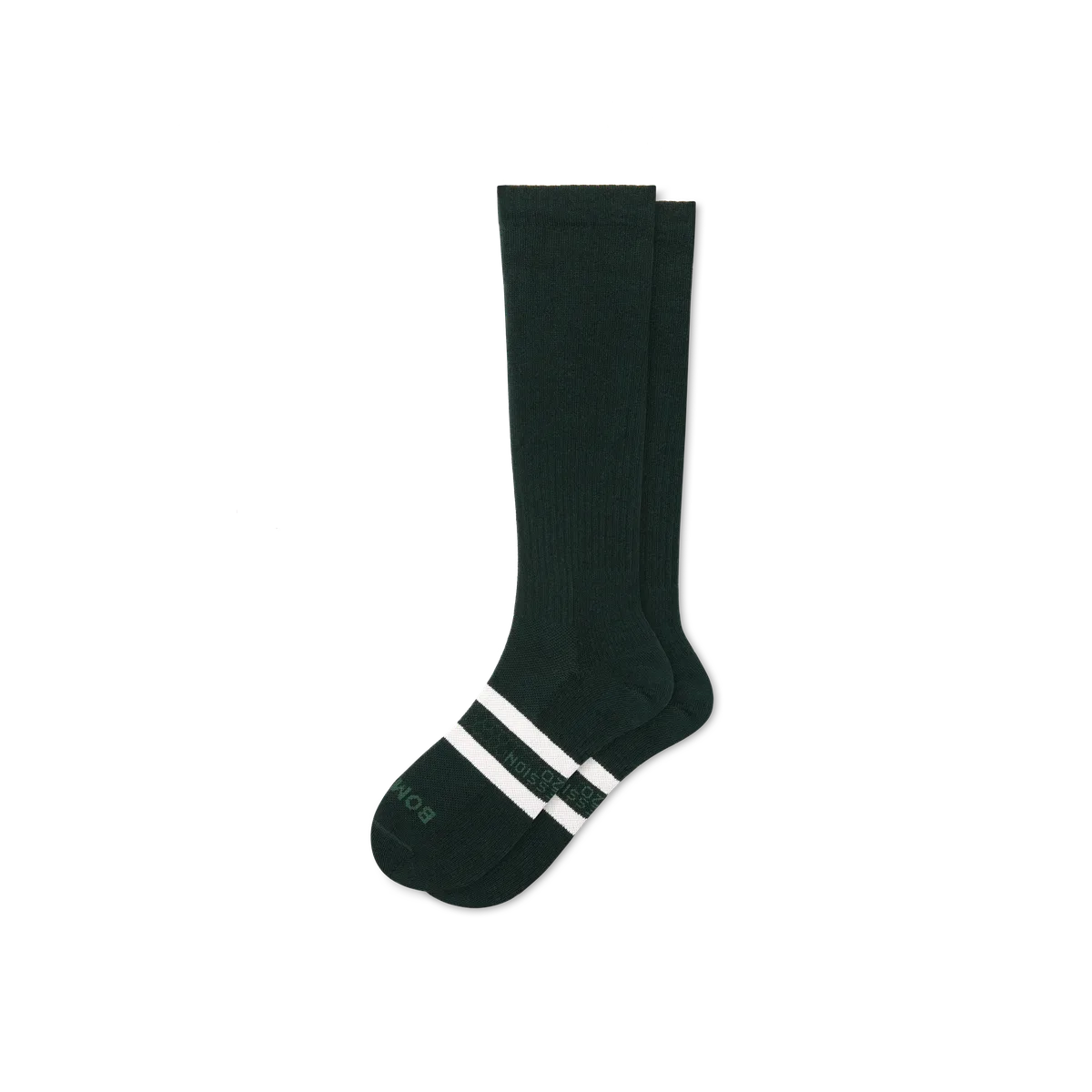
Photo: Bombas
Some people will not wear compression socks because they look clinical. Bombas solves that. The Everyday Compression knee-high is a 15-20 mmHg graduated sock cut and cushioned like an ordinary Bombas, so it reads as a normal sock you would wear anyway, just with support built in. It is the pair to buy if the aesthetics are the thing keeping you from wearing compression at all.
The honest trade-off: the support is gentle. Pack Hacker’s testers noted you barely feel the compression in Bombas, which is a plus if you want subtle and a minus if you want a firm squeeze on a long flight. It is also one of the pricier single pairs here, so check the current price on their page before you commit. A wider-calf tester ended up scrunching hers down, so this is not the wide-calf answer either.
Buy it if a normal-looking sock is what gets you to actually wear one. Skip it if you want compression you can clearly feel.
| Socks | Best for | The honest catch |
|---|---|---|
| Comrad Knee-High | Most healthy flyers, 15-20 mmHg | $34 for a single pair |
| Vim & Vigr Nylon | Doctor-recommended or ultra long-haul, 20-30 mmHg | Firm squeeze, not for everyone |
| Charmking 8-Pair | Cheap, a clean pair every day | Thin knit, loud prints, no wide calf |
| Sockwell In Flight | Cold cabins, merino comfort | Wool can itch sensitive skin |
| Wellow Wide Calf | Calves 18 to 22 inches | Sold in three-packs, higher entry cost |
| Bombas Everyday | Looking like a normal sock | Compression is gentle, pricey per pair |
The Comrad is the pair I point most people to, but it is wrong for a few travelers, and pretending otherwise would waste your money.
Skip it if your calves are wider than a standard sock allows. The Comrad will cut in, you will roll it down, and a rolled-down sock does nothing. The Wellow wide calf exists for exactly this.
Skip it if a doctor has told you to wear firmer compression, or ultra long-haul flying is your normal. The 15-20 mmHg Comrad is the healthy-flyer range. The Vim & Vigr at 20-30 mmHg is the one to size up to, and only for a real reason.
Skip it if you want a week of socks for the price of one pair. The Charmking eight-pack does that job, just do not expect it to look understated.
One honest closing note. If you are at real risk of a clot, socks are the smallest part of the plan. The vascular doctors the American Heart Association spoke to were blunt that the highest-value moves on a long flight are simple: get up and walk every couple of hours, drink water, and flex your calves and ankles in your seat. Anyone with a history of DVT, a clotting disorder, diabetes, varicose veins, peripheral artery disease, or a pregnancy should ask a doctor about the right compression level before a long flight, rather than guessing from a product page.
For a healthy person on a short flight, compression socks for flying are a comfort item, not a medical necessity. They reduce the tight, swollen feeling in your feet and lower legs by keeping blood from pooling while you sit still. The American Heart Association’s experts said they are fine to use but could not say how much they help an ordinary low-risk traveler, and the American Society of Hematology does not recommend them for low-risk flyers on short flights. If you swell on planes, they are worth it for comfort. If you do not, you can skip them.
They can lower the odds of a symptomless clot, but the evidence is narrower than the marketing suggests. Pooled trials found that wearing graduated stockings on flights over four hours sharply reduced symptomless DVT picked up on scans. Those same trials could not show an effect on serious outcomes like pulmonary embolism, because none of the healthy participants had one. Absolute risk for a typical flyer is very low to begin with. If you are genuinely at risk, ask your doctor, because socks are only one small piece of the plan.
For most healthy travelers, 15-20 mmHg is the range to start in. It fights swelling without feeling like a tourniquet, and it is what my top pick uses. Step up to 20-30 mmHg only if a doctor recommends it, you have a condition like varicose veins or a history of clots, or you regularly fly ten hours or more. Firmer is not automatically better. A too-firm sock is more likely to pinch and less likely to get worn.
Put them on before you travel, ideally at home or while you wait at the gate, rather than wrestling them on in a cramped airplane seat. They are easiest to pull on when your feet are not yet swollen. Keep them on for the whole flight, and if you like, keep them on afterward while you walk through the terminal, which is when a lot of the post-flight swelling drains. If a knee-high feels too long, do not roll the top down, because that band can act like a tourniquet.
Neck pillow travel picks that earn their space: my top pick, a wrap-style runner-up, the packable one, and who should skip each, checked on live brand pages.
Universal travel adapter picks worth buying, chosen from tested reviews and live brand pages: our top pick, honest trade-offs, and who should skip it.
The travel cable organizers worth buying, chosen from tested rankings and real owner reviews: my top pick, honest trade-offs, and who should skip it.