Compression Socks for Flying: What I Pack and What I Skip
Compression socks for flying, checked on live brand pages: my overall pick, a 20-30 mmHg option, a budget multipack, a merino pair, and a wide-calf choice.
Buy the Cabeau Evolution S3. It is the travel neck pillow that both of the hands-on testers I trust rank at the top of the memory foam class, the one FlyerTalk regulars keep naming, and the one that fixes the actual problem, which is your head falling forward the moment you doze off. Cabeau currently sells it as The Neck’s Evolution S3 for 59.99 dollars, a price I checked on their page while writing this. If your neck is short, your bag is tiny, or your real enemy is a flat hotel pillow, one of the four alternates below is your pick instead.
I want to be honest about this category up front, because it has earned the skepticism. The classic microbead U-pillow from the airport kiosk scored dead last in the ten-pillow comparison I leaned on for this guide, and the forum crowd calls the whole category a waste of space. They are mostly right. A cheap U-pillow’s thick back pushes your head forward, the sides collapse, and you land in Lisbon with the exact crick you paid to avoid. The five below are the exceptions, chosen from testers who bought and flew with them, then checked against each brand’s own page.
Some links here are affiliate links, which means Intastravel may earn a commission if you buy through them. It does not change which products we pick or what we say about them.
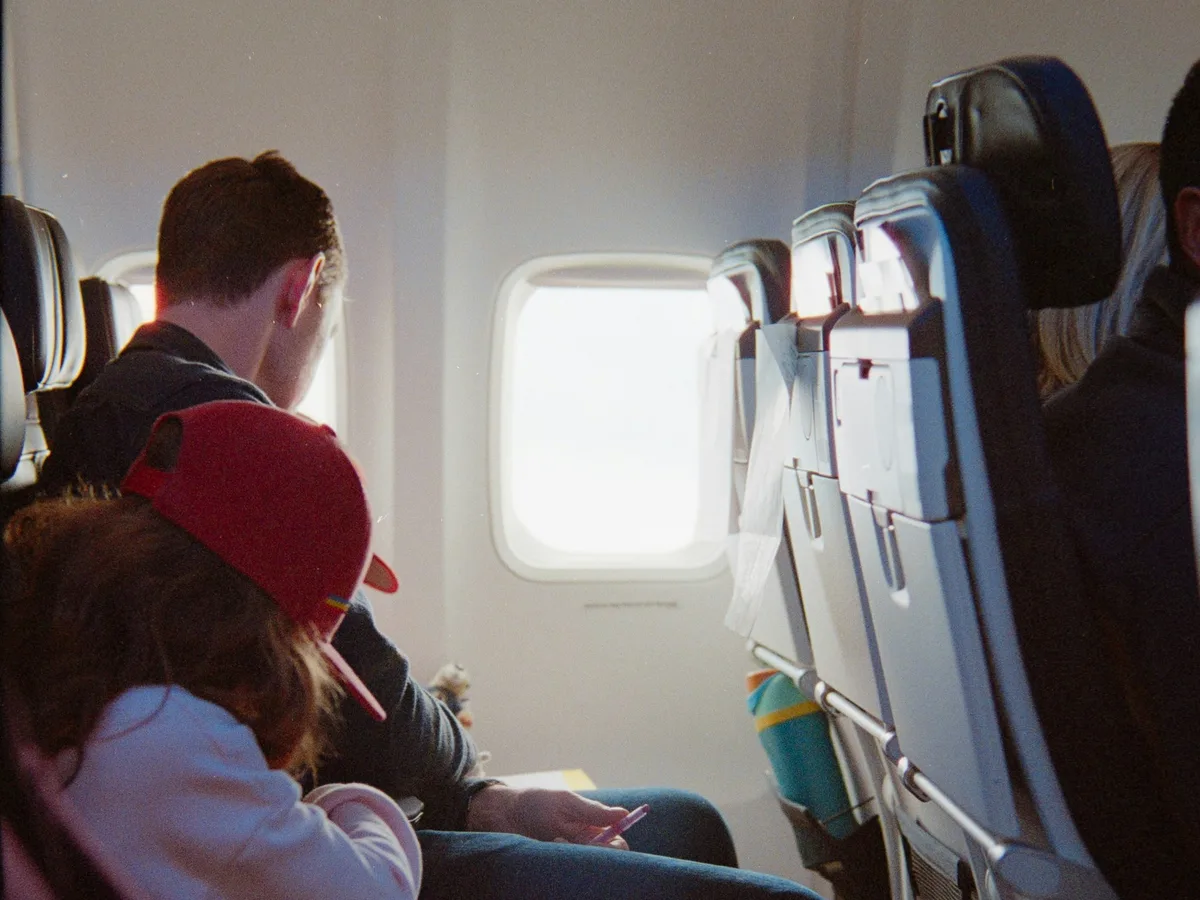
Three things decide it, and softness is not one of them.
Support geometry comes first. Pack Hacker interviewed a physician who designs travel pillows, and his framing is the most useful sentence in this category: a good pillow supports the head near the base of the skull, stabilizes it from the sides so it cannot tilt under its own weight, and leaves the back of the head free to rest against the seat. Most pillows get this backwards. They pile padding behind your neck and leave the front gap open, which is exactly where your chin drops. The pillows below either close that gap or brace the sides properly.
Honesty about sleep comes second. The same physician said plainly that no product can guarantee you will fall asleep on a plane. A good pillow reduces neck strain and gives your head somewhere to be. That is the whole promise, and anyone promising more is selling.
Packed size comes third. The most supportive pillows are the bulkiest, and the tiniest ones are inflatable and less comfortable. Decide which end of that trade you live on before you buy, because no single pillow wins both.
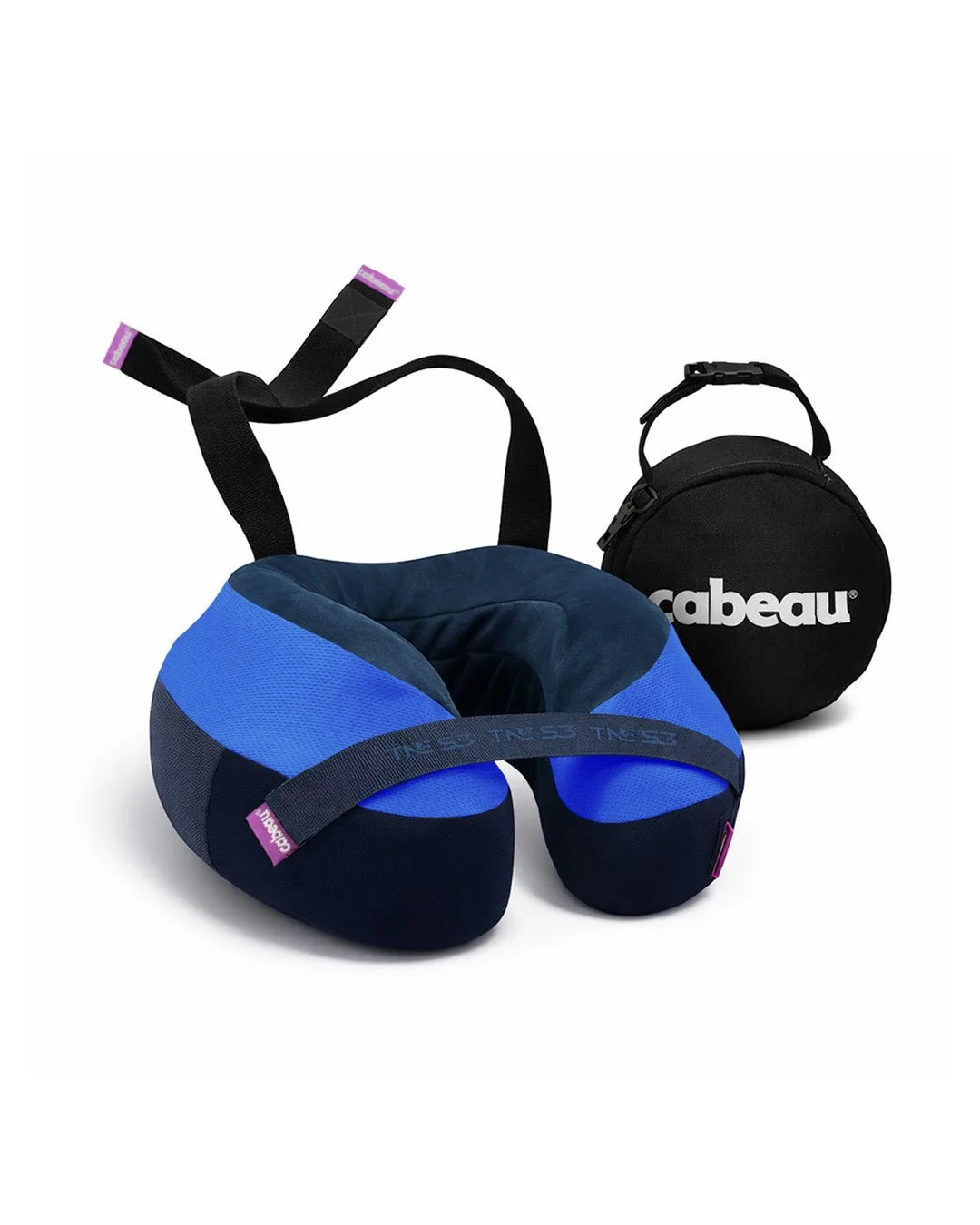
Photo: Cabeau
The Evolution S3 wins because it takes the two failure points of the classic U-pillow and fixes both. The back section is deliberately thin, so it does not shove your head forward off the seat. And the front closes with a cord lock, so the sides pull in against your chin and your head cannot drop through the gap. One reviewer who tested it against nine others found the cord lock effectively turns it into 360-degree support. Pack Hacker gave it the highest stability score on their list, helped by the strap that hitches it to the seat’s headrest wings.
The honest trade-offs: it is one of the bulkier picks here even compressed into its case, and Pack Hacker found the memory foam less plush than others they have used. The high sides are the bigger filter. The tester who loved it is 193 centimeters tall, and his 160-centimeter partner found the sides too raised for her.
Buy it if you are average height or taller and you want the pillow that best keeps your head upright on a long flight. That is the job, and this is the one that does it.
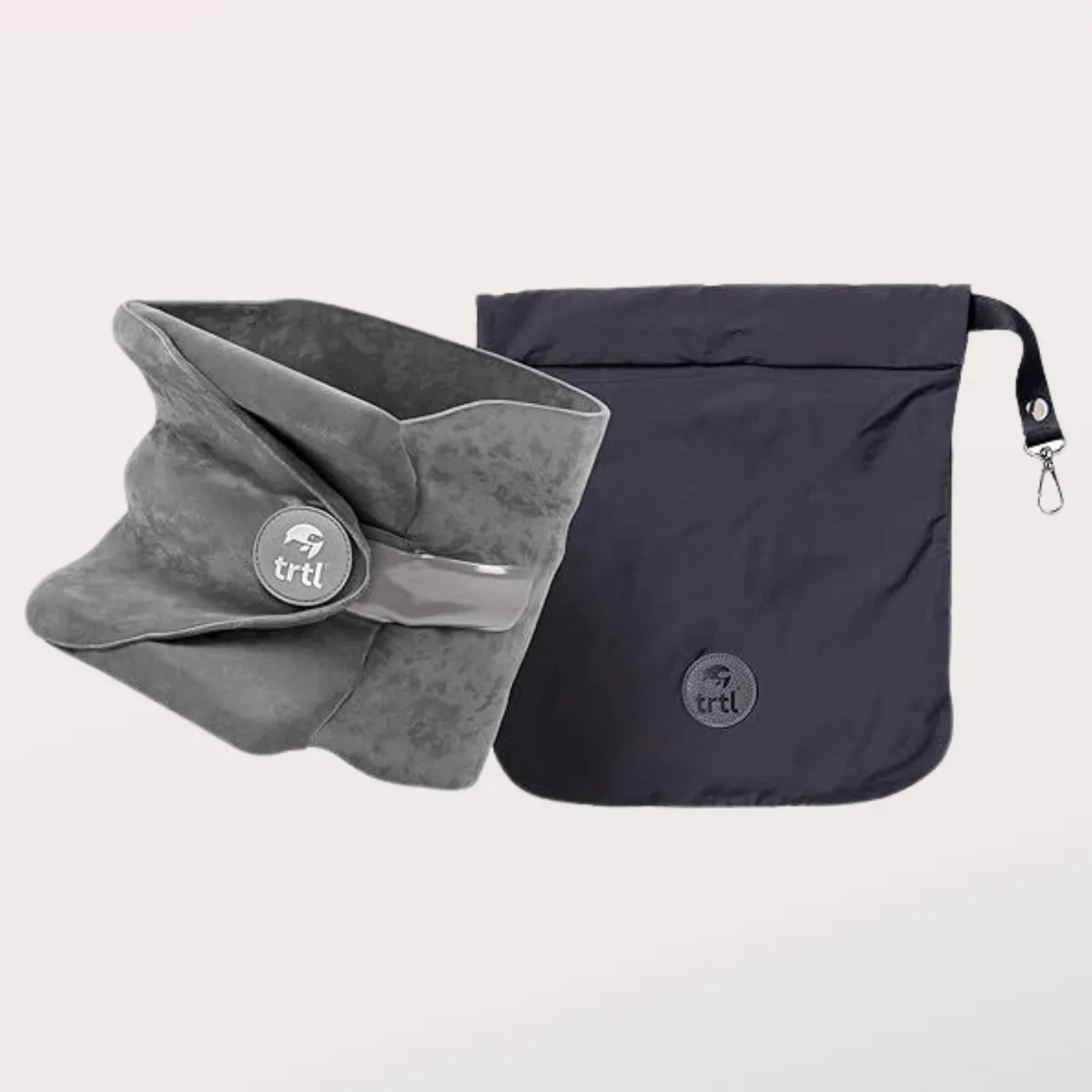
Photo: Trtl
The Trtl does not look like a pillow at all. It is a fleece scarf with a flexible brace inside, and you wrap it so the brace props your head up from one side, like a hammock for your skull. Trtl’s page lists it at 8.7 by 9.5 by 3.6 inches and 4.7 ounces, the flattest packer of the foam options here, and the wrap goes in the washing machine. A travel writer at The Points Guy’s newsletter named it the one pillow she kept after calling her stuffable one a waste of money. It was 43.99 dollars on sale at Trtl when I checked, down from 54.99.
The honest trade-offs are why it is the runner-up rather than the pick. The support sits on one side only, so if your head bobs the other way, nothing catches it. Reviewers consistently found the fleece runs warm, and you have to wrap it snugly for real support, which compounds the warmth. One tester’s partner, a nurse, took one look and asked if it was a neck brace in disguise. It sort of is, and that is either the appeal or the dealbreaker.
Buy it if you sleep leaning to one side and run cold on planes. Skip it if you are a warm sleeper or a head-bobber.
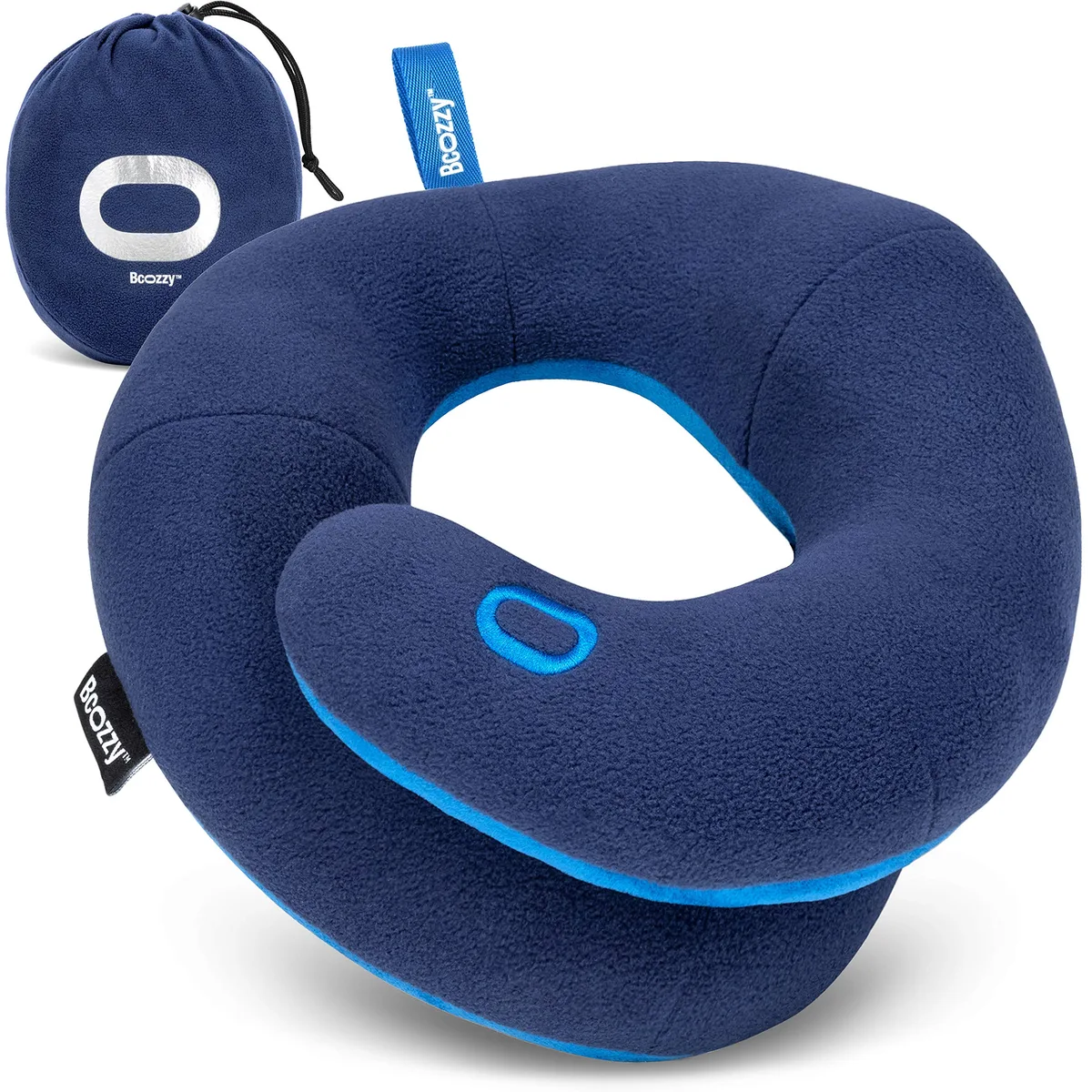
Photo: BCOZZY
The BCOZZY is the top overall pick of the ten-pillow comparison at No Sleepless Nights, and the reason is the shape. Instead of a U with a gap at the front, it is a coil whose padded ends overlap under your chin, so there is no opening for your head to drop through. You can stack the ends for more height or lay them flat for less, one of the few designs that adjusts to different necks instead of hoping yours matches the mold. It comes in several sizes including kids’ sizes, the whole pillow machine washes, and adult sizes start at 39.95 dollars on BCOZZY’s page. It also passed what that reviewer called the partner test: his partner tried every pillow in the batch, kept this one, and fell asleep.
The honest trade-offs: it is soft fill rather than memory foam, so it cushions more than it braces. Pack Hacker found the hook-and-loop fastener does not latch well and the smaller size will not suit longer necks. It also barely compresses, so it mostly travels clipped to the outside of your bag.
Buy it if the Cabeau’s stiff sides put you off and you want plush comfort that still closes the front gap. Skip it if you need firm bracing or clean pack-down.
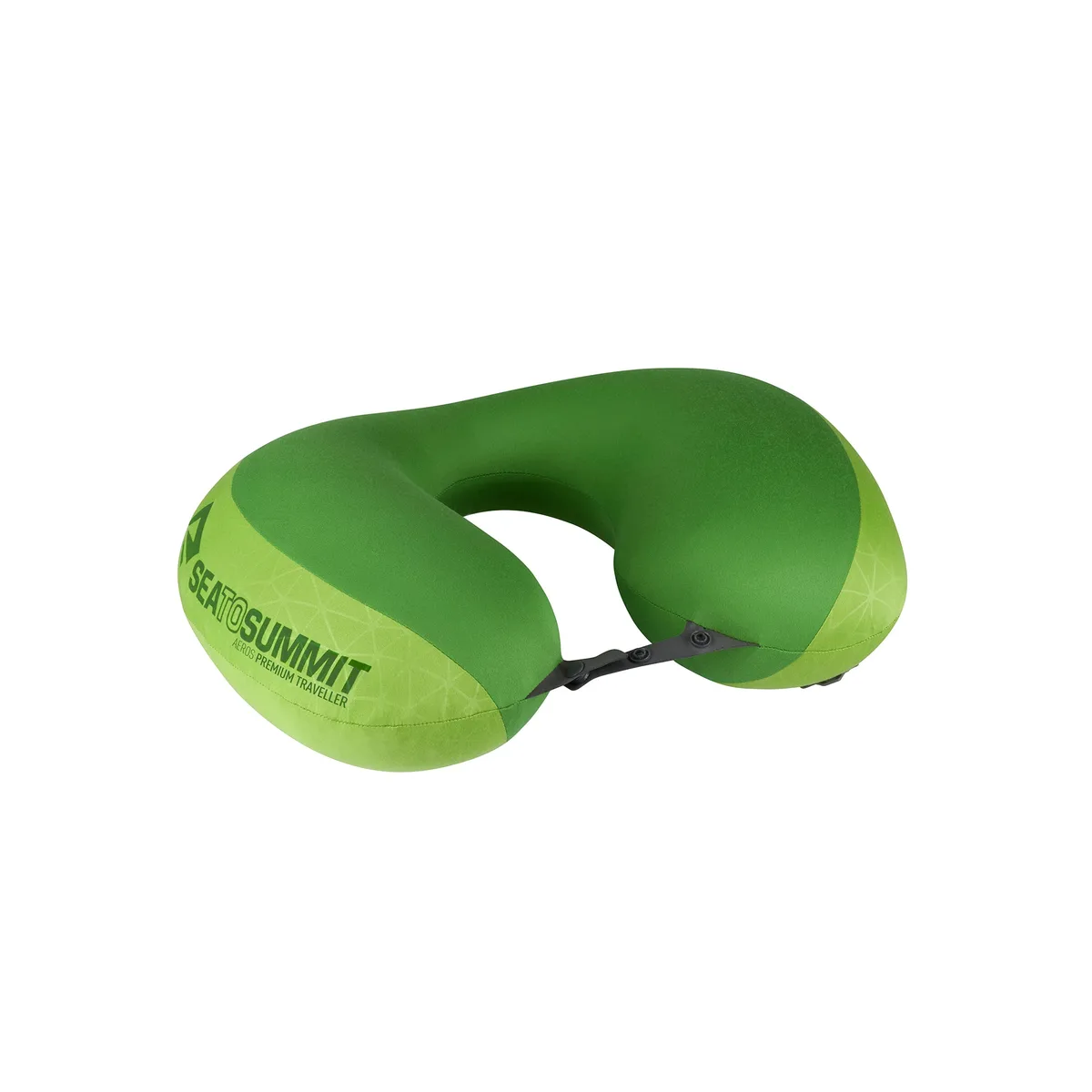
Photo: Sea to Summit
Every foam pillow in this guide costs you real bag space. This one does not, because it is inflatable and folds down to nearly nothing, and it is the one inflatable a tester I trust actually recommends. Pack Hacker named it their best inflatable: wide at the sides where support matters, thin at the nape so it does not push your head forward, with a toggle to hold the front gap closed and a valve for fine-tuning firmness. Sea to Summit lists it at 54.95 dollars, and the brand’s warranty reputation matters here, because a punctured inflatable is a very small piece of trash.
The honest trade-offs come straight from the testers: it scored a five out of ten in both comfort and stability, because air simply does not feel like foam. It is a nap pillow, not an eight-hour-sleep pillow. And one puncture ends it. Pack Hacker found it less durable than the rest of their list.
Buy it if you travel with a small bag and refuse to clip a foam doughnut to the outside. Skip it for a long-haul where sleep is the whole point.
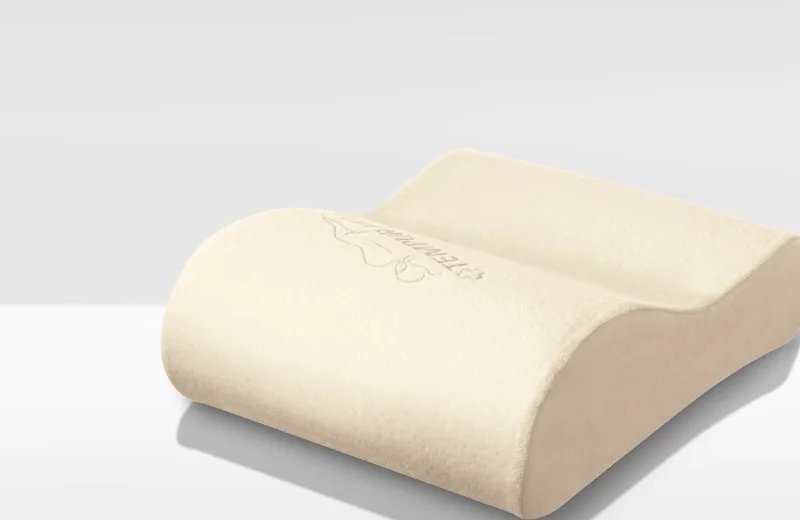
Photo: Tempur-Pedic
This one solves a different problem, and for some travelers it is the bigger one. It is not a U-pillow for the plane. It is a small contoured block of Tempur-Pedic’s foam, 10 by 12 by 4 inches per their page, that replaces the sad flat pillow waiting at the hotel. Tempur-Pedic rates it extra-firm, gives it a washable cover and a pouch that doubles as a neck roll, and backs it with a five-year warranty. The reviews on their page skew toward people with cranky necks who pack it for every trip, including one who traveled two weeks with it and skipped the hotel pillows entirely.
The honest trade-offs: at 79 dollars it is the most expensive pick here, it does nothing for you in an upright seat, and extra-firm is a specific taste. Tempur-Pedic also does not accept returns on pillows, so there is no trying it on spec.
Buy it if your neck hurts after hotel nights rather than after flights. Skip it if your problem is the seat, because the four picks above exist for that.
| Pillow | Best for | The honest catch |
|---|---|---|
| Cabeau Evolution S3 | Best all-around plane support | Too tall for short necks, bulky |
| Trtl Travel Pillow | Side-leaners, flat packing | One-sided support, runs warm |
| BCOZZY | Plush 360 comfort, multiple sizes | Weak fastener, barely compresses |
| Sea to Summit Aeros | Smallest pack-down | Air is not foam, puncture risk |
| Tempur-Pedic Travel | Bad hotel pillows, not planes | $79, extra-firm, no returns |
The Evolution S3 is the pillow I point most people to, but it is wrong for three kinds of travelers, and pretending otherwise would waste your 60 dollars.
Skip it if you are short or short-necked. This is the recurring note from every tester: the high sides that brace a taller head sit at cheekbone height on a smaller frame. The BCOZZY adjusts down in a way the Cabeau cannot, and it comes in actual sizes.
Skip it if bag space is the fight you are losing. The Trtl packs flat and the Sea to Summit disappears entirely, and a pillow you leave at home supports nothing.
Skip it if your neck feels fine on the plane and terrible at the hotel. That is a pillow problem, and the Tempur-Pedic is the only pick here aimed at it.
One more honest note: some travelers simply cannot sleep sitting up, and the forums are full of them. No pillow fixes that. Save the money for a better seat.
For most travelers, the Cabeau Evolution S3, sold on Cabeau’s site as The Neck’s Evolution S3 for 59.99 dollars. Two independent hands-on testers rank it at or near the top of the category, and its thin back plus front cord lock fix the two things that make cheap U-pillows useless. Short-necked travelers should pick the BCOZZY instead.
Memory foam supports better and inflatables pack better, and no pillow does both well. The testers I leaned on scored the best inflatable, Sea to Summit’s Aeros, a five out of ten for comfort against sevens and eights for the foam picks. Choose foam when sleep matters most, and the inflatable when your bag is small and naps are enough.
The good ones reduce neck strain by keeping your head from tilting or dropping forward, which is what a physician who designs them told Pack Hacker the category can honestly promise. None of them can guarantee sleep on a plane, and the classic microbead airport pillow scored last in the comparison I used. The skeptics are right about most of the category, just not the five above.
The Cabeau compresses into an included round case, the Trtl folds flat into a drawstring bag, and the Sea to Summit deflates to pocket size. The BCOZZY barely compresses, so it travels clipped to your bag’s handle with its snap strap. An outside-mounted pillow costs no packing space at all.
Compression socks for flying, checked on live brand pages: my overall pick, a 20-30 mmHg option, a budget multipack, a merino pair, and a wide-calf choice.
Universal travel adapter picks worth buying, chosen from tested reviews and live brand pages: our top pick, honest trade-offs, and who should skip it.
The travel cable organizers worth buying, chosen from tested rankings and real owner reviews: my top pick, honest trade-offs, and who should skip it.