Most Travel Neck Pillows Are Bad. These Five Are Not.
Neck pillow travel picks that earn their space: my top pick, a wrap-style runner-up, the packable one, and who should skip each, checked on live brand pages.
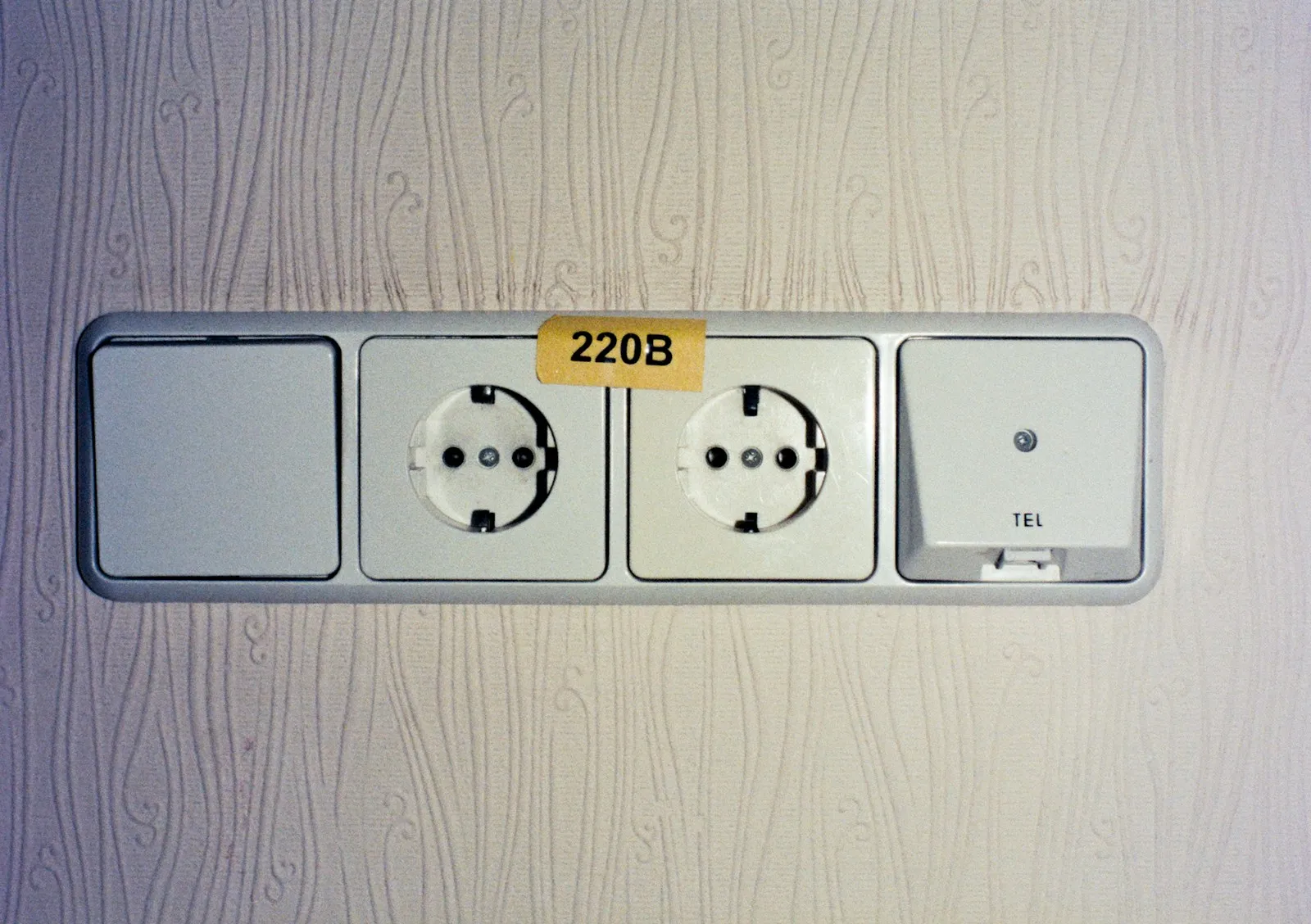
Buy the Tessan GaN 65W Universal Travel Adapter. It covers the four plug types that get you into more than 150 countries, it charges a laptop at a usable speed instead of a trickle, and it costs about 43 dollars from a brand the tech testers keep ranking at the top of this category. A universal adapter is one of the few travel accessories where the boring, tested choice really is the right one, because the failure mode is not lost packing space. It is a dead phone, or worse. The rest of this guide covers the runners-up, the one genuinely different option for people with three-prong devices, and the two warnings that matter more than any pick.
I spent a decade buying travel accessories for airport shops, and adapters were the category with the highest returns. Most of those returns were user error the packaging invited, which is why this guide spends as much time on what an adapter cannot do as on which one to buy. The picks below come from the current tested rankings and from the brands’ own spec pages, which I checked live while writing. Every electrical number here is the manufacturer’s, not mine.
Some links here are affiliate links, which means Intastravel may earn a commission if you buy through them. It does not change which products we pick or what we say about them.
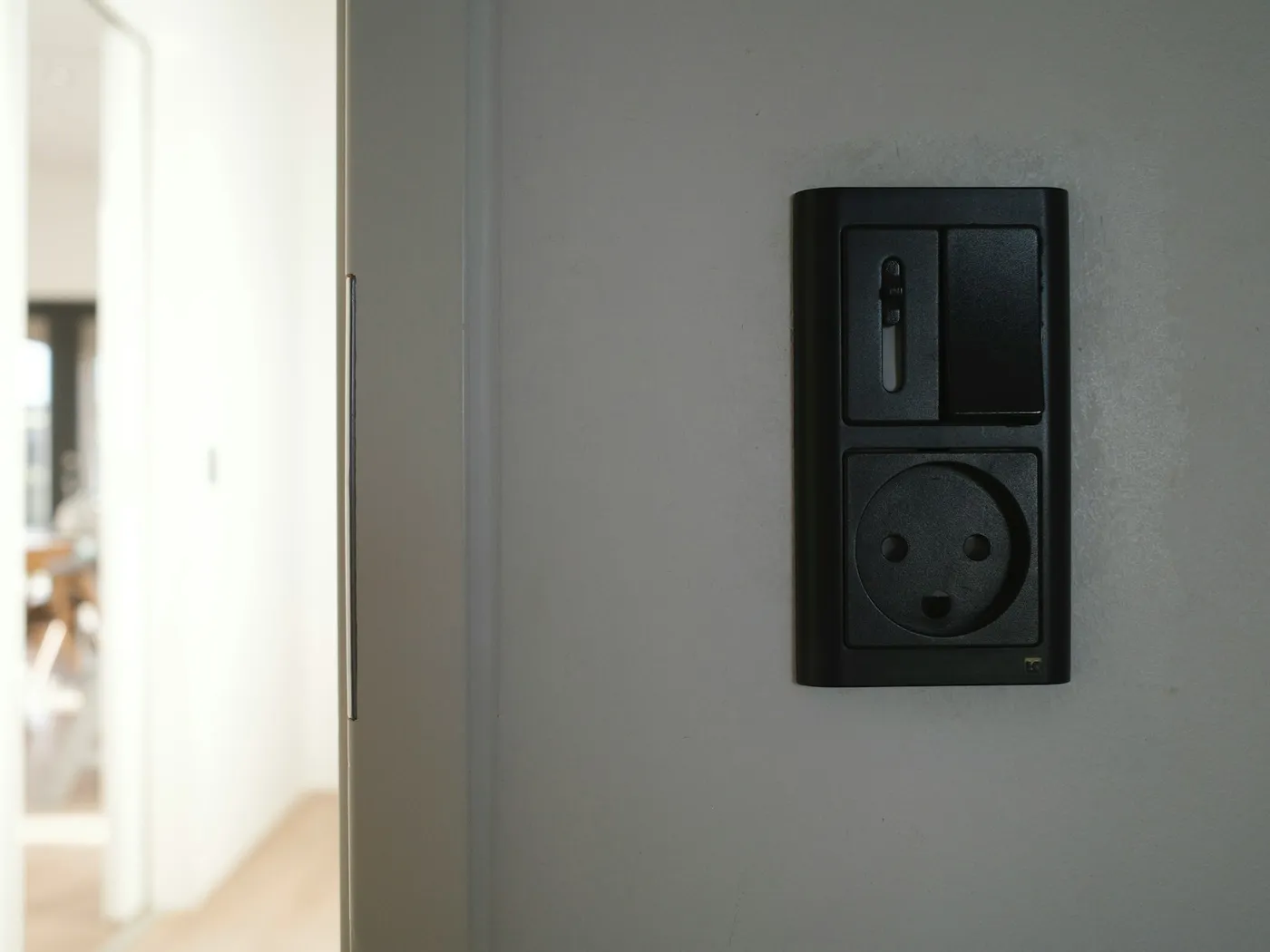
Four things decide it, and port count is the least of them.
Brand and fuse come first. An adapter sits between the wall and everything you own, so this is the wrong place for a no-name bargain. The testers who cover this category keep landing on the same few brands, Ceptics, Tessan, and Epicka among them, and every pick below has a replaceable fuse and safety shutters. The forum horror stories, including one adapter permanently stuck in a wall in Scotland, all start with the cheap one.
Honest wattage comes second. If you only charge a phone overnight, almost anything works. If you need to refill a laptop, you want a GaN adapter that states a real number, like 65 watts, on its spec page. Numbers matter here, so I only repeat the manufacturer’s.
Coverage comes third. The standard slider design gives you EU, UK, and US plugs plus rotating pins for Australia and China, which covers most itineraries. If your trip includes India or South Africa, check the brand’s country list before you buy, because the common four types do not cover everywhere.
Grounding comes last, but only because most people can ignore it. Universal adapters as a class are not grounded. If any device you carry has a third metal pin on its plug, that pin is there because a safety regulator required it, and you should buy the grounded kit below instead of forcing it into an ungrounded cube.
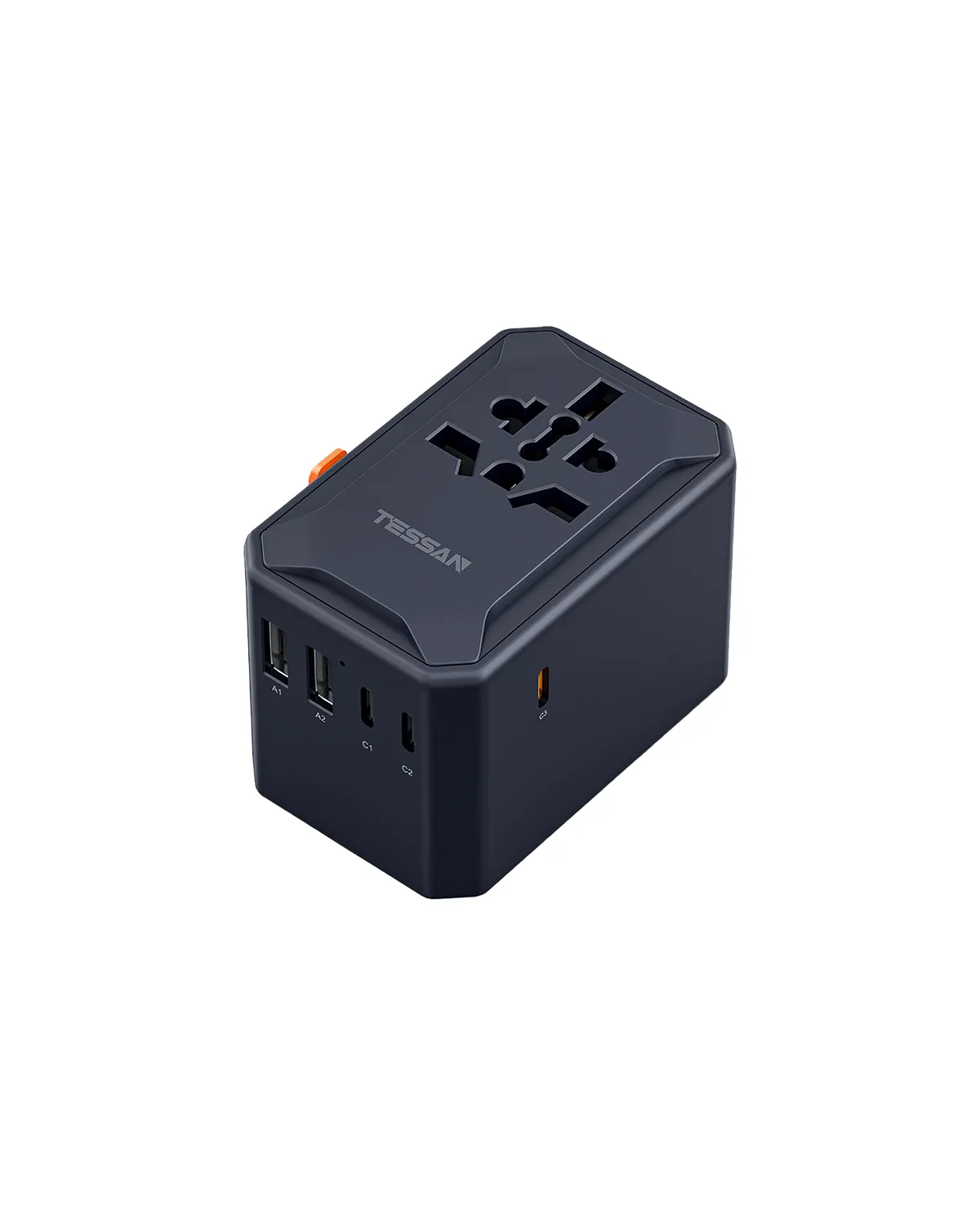
Photo: Tessan
This is the adapter I recommend to most people, because it does the whole job without an asterisk. The slider design pushes out the EU, UK, and US plugs and the pins rotate for Australia and China, which Tessan says covers more than 150 countries. The universal outlet takes whatever charger you already own, and the five USB ports below it mean one wall socket charges the whole nightstand. The 65-watt USB-C port is the reason to pay for this over the cheap cubes: it is a real laptop charger, not a phone trickle. The tech testers ran this as their top pick until recently, and they still recommend it as the compact choice. It also helps that it looks better than most of the category, though that is a tiebreaker, not a reason.
The honest trade-offs: it is a chunky block, like every all-in-one, and it hangs off the wall with the weight of your cables pulling on it. It is not grounded, so three-prong devices are out. And Tessan’s own page says plainly that it is an adapter, not a voltage converter, which means your hair dryer is still staying home. More on that below, because it is the mistake that kills the most gadgets.
Buy it if you cross plug regions more than once a year and carry a laptop. If your travel is simpler or your budget is tighter, keep reading.
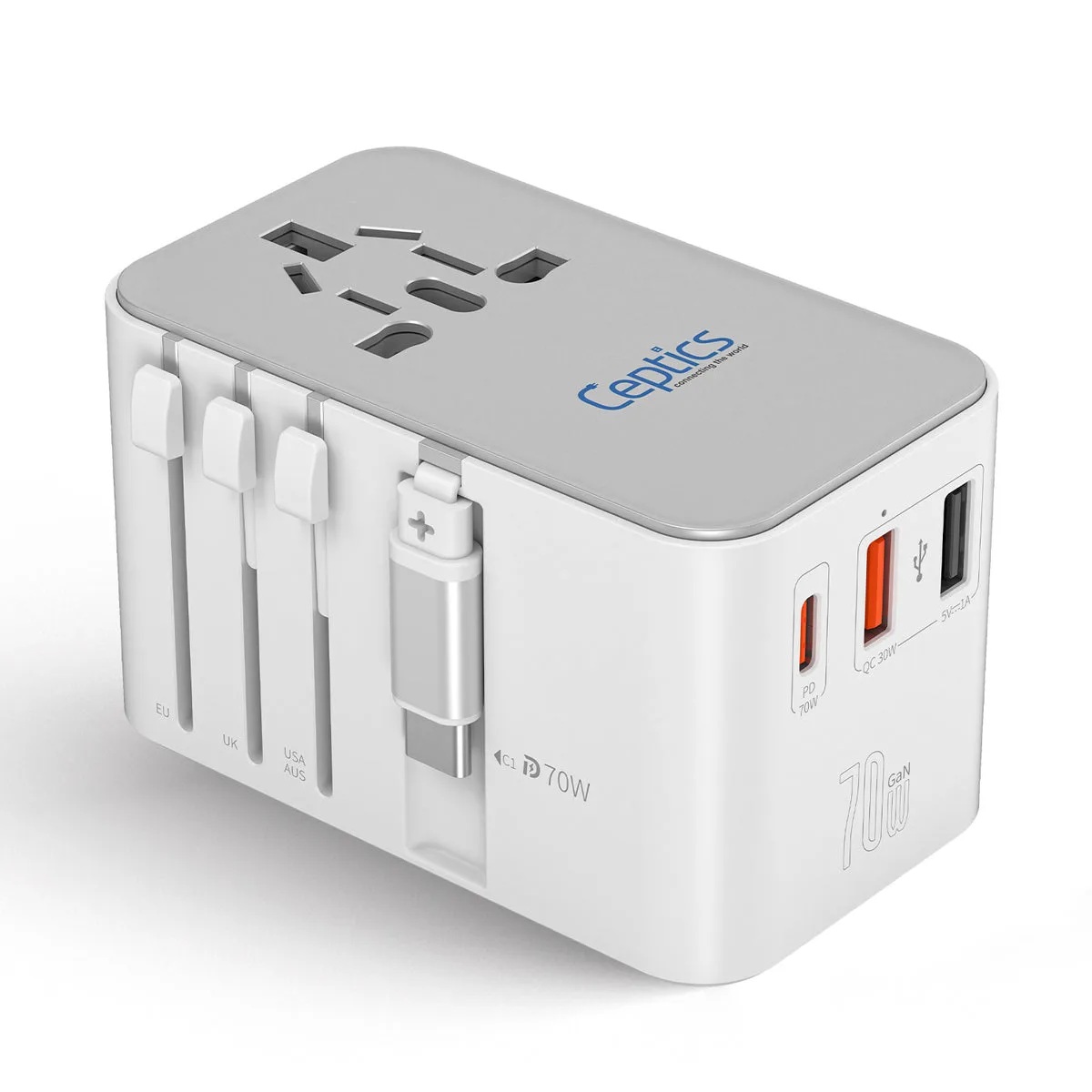
Photo: Ceptics
Ceptics is the brand the testers currently rank first in this category, and this 70-watt model has the feature that won them over: a retractable USB-C cable built into the adapter itself. The end parks magnetically against the body, and it means one less cord to pack, lose, or leave in a hotel wall. Around it you get the same slider coverage, a universal outlet, and additional USB-C and USB-A ports, with GaN charging that handles a laptop.
The honest catches: the built-in cable is also the built-in point of failure, because if it frays or the retraction mechanism dies, that convenience is gone and you are back to carrying a cord anyway. It runs about 40 dollars, it is no smaller than the Tessan, and like the rest of the class it is not grounded. Worth knowing: the testers’ absolute favorite is this adapter’s 100-watt sibling, which was sold out at the brand when I checked, so the 70-watt is the one you can actually buy today.
Buy it if the idea of never packing a charging cable again genuinely appeals to you. Skip it if you would rather not bet on a moving part.
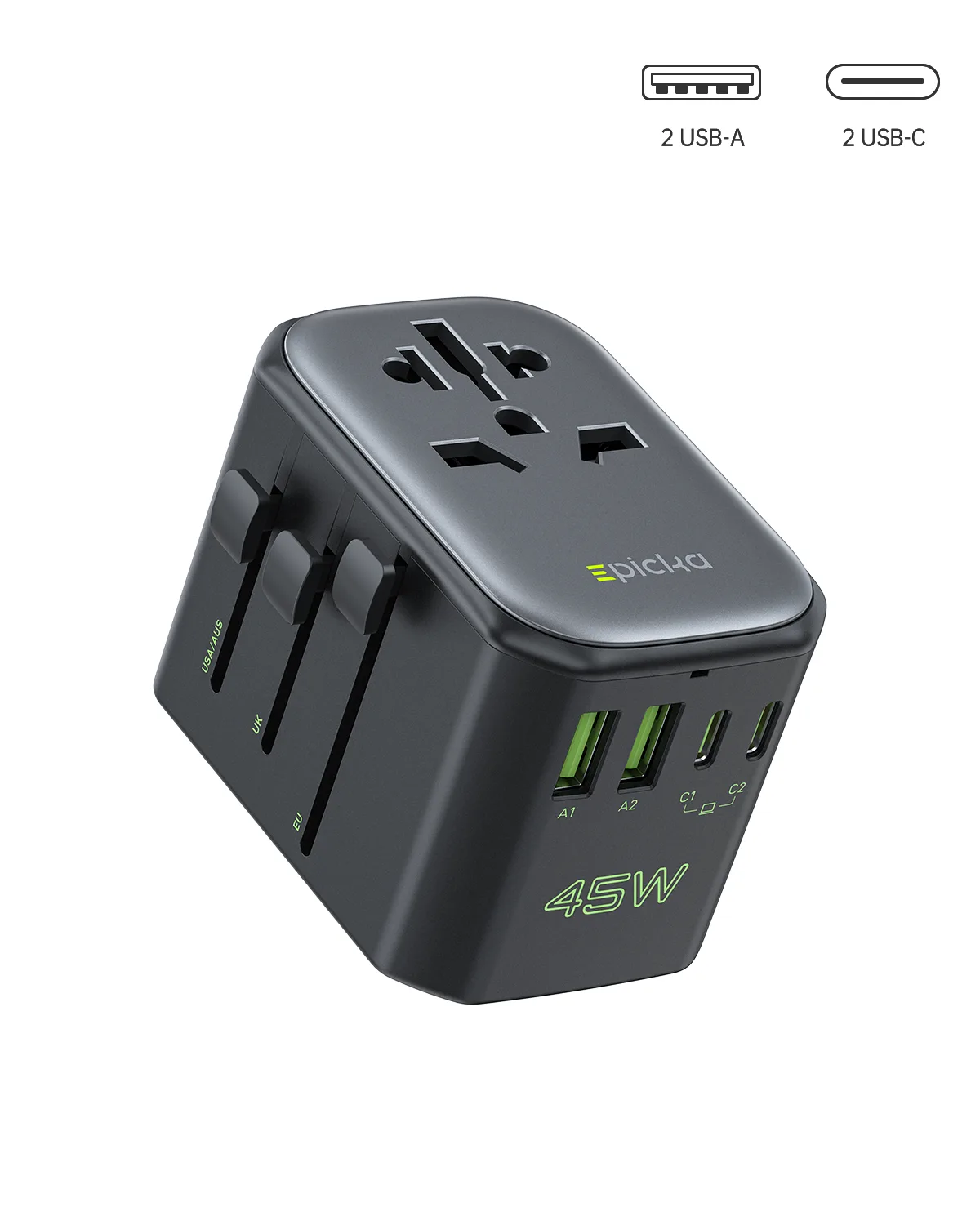
Photo: Epicka
Epicka is the adapter brand travelers have been recommending to each other for years, and the Pulse is its current sweet spot. Epicka’s page lists 45 watts over USB-C, two USB-C and two USB-A ports, coverage across 200-plus countries, a 10-amp fuse with safety shutters, and a two-year warranty, which is double what most of the category offers. The testers liked the beveled shape, which sounds cosmetic until you hold one: it is noticeably less of a brick in the hand and in the bag. Epicka also calls it cruise friendly, which matters because ships ban the cheap surge-protected strips people try to bring aboard.
The honest trade-offs: 45 watts charges most laptops slowly rather than quickly, so heavy laptop users should spend up. Epicka’s own spec sheet says it does not fit Type D or Type M sockets, so India and South Africa are off its map. And it ships with a little zip bag the testers rightly called superfluous.
Buy it if you charge phones, tablets, and earbuds and want a trusted name at a fair price. Skip it if a fast laptop charge is the whole point, or your itinerary includes India.
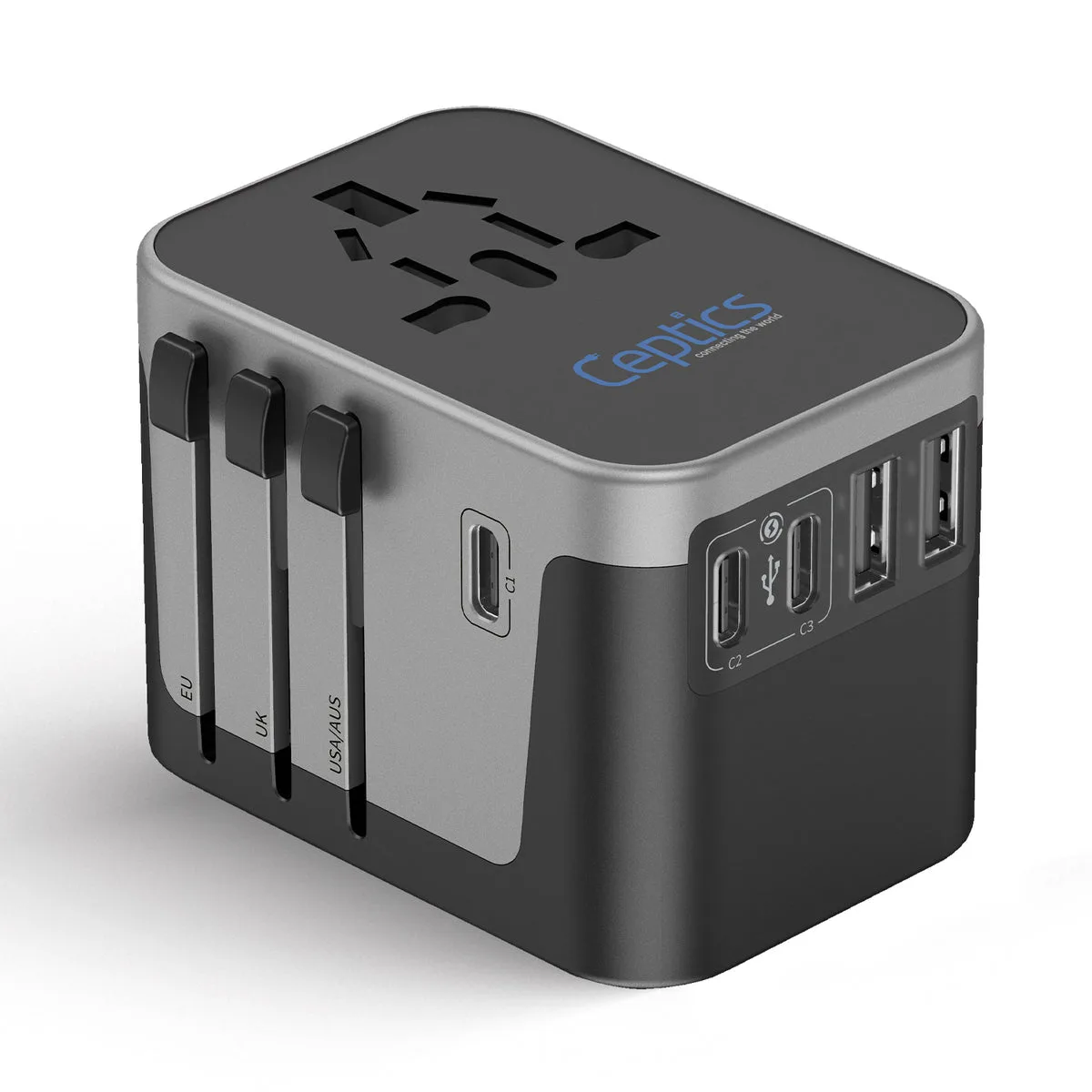
Photo: Ceptics
Nineteen dollars, from the same brand as the testers’ top pick. You get the identical slider coverage for 150-plus countries, a universal outlet, and five USB ports, three USB-C and two USB-A, capped at 30 watts total per Ceptics’ page. The testers’ verdict on the slower speed was exactly right: if you charge your gadgets overnight, you will never notice. The sliders lock in place properly, there is a fuse with a spare, and nothing about it feels like the no-name cubes at twice the failure rate.
The honest trade-offs are the obvious ones. Thirty watts across five ports means nothing charges fast, and a laptop will barely sip. Like its bigger siblings it is not grounded. And the finish picks up scuffs, which matters not at all.
Buy it if your kit is a phone, a watch, and earbuds. Skip it if a laptop needs to leave the room charged in an hour.
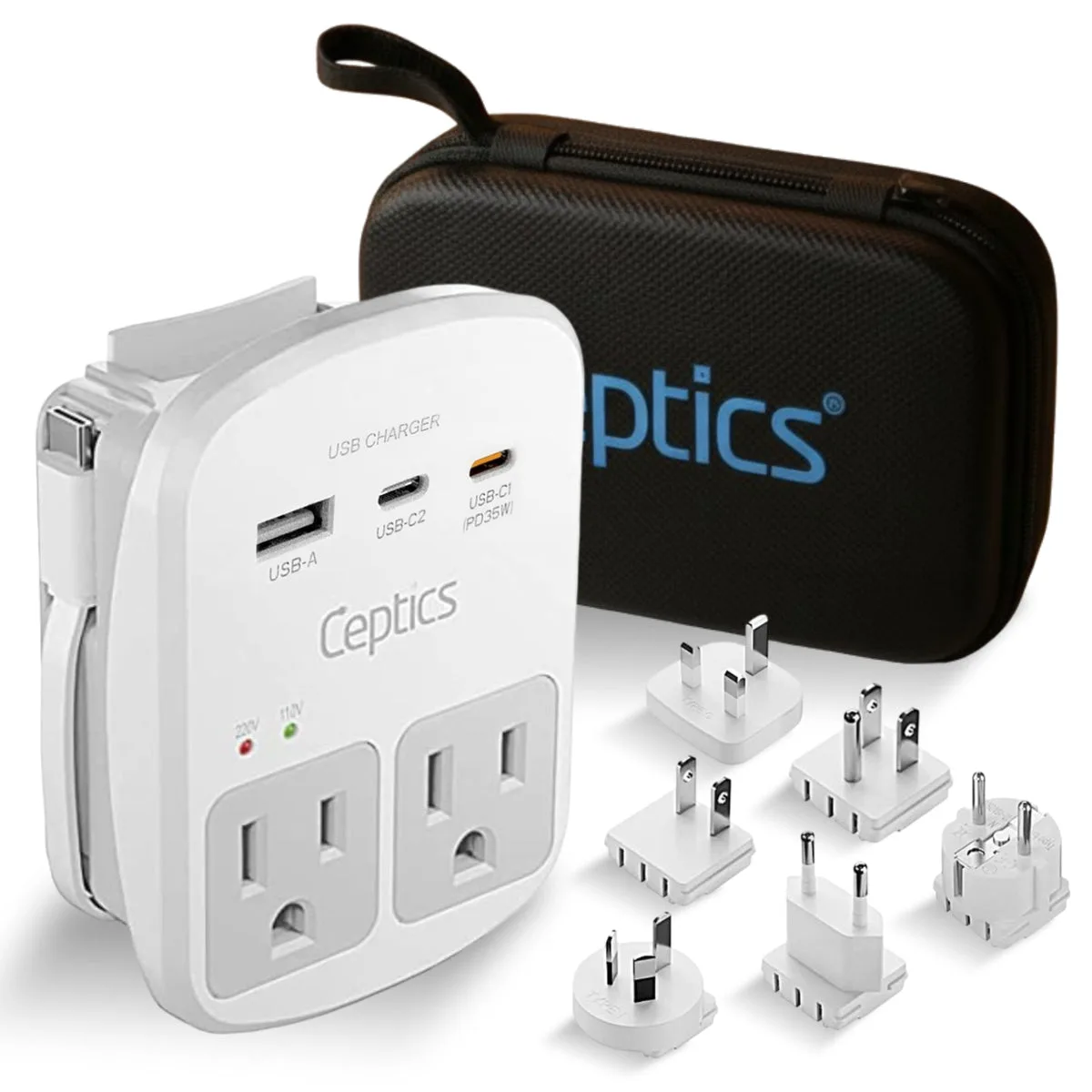
Photo: Ceptics
This is the answer to the problem every cube above shares: none of them are grounded. The World-Way kit is a charging block with two US outlets, USB-A and USB-C ports, and a 35-watt USB-C port, plus six swappable plug attachments that cover most of the world, and the whole system is grounded with surge protection and voltage indicator lights. If you travel with anything that has a three-prong plug, a desktop-grade laptop brick, some CPAP machines, certain camera chargers, this is the one on this list actually built for it. The travel magazines’ testers named this their best kit, and it matches the long-standing advice from the plug experts that separate, properly grounded adapters beat universal cubes for reliability.
The honest trade-offs: it is a kit, which means six small attachments that can wander off, even with the included case. It is bulkier in the bag than any single cube. And swapping heads at every border is a chore the all-in-ones exist to avoid.
Buy it if you carry a grounded device, or you want indicator lights that confirm the socket’s voltage before you trust it. Skip it if your whole kit is two-prong USB chargers, because the cubes above are simpler.
| Adapter | Best for | The honest catch |
|---|---|---|
| Tessan GaN 65W | Most travelers, real laptop charging | Not grounded, chunky on the wall |
| Ceptics 70W | Built-in retractable cable, one less cord | The cable is a moving part that can fail |
| Epicka Pulse 45W | Phones and tablets, cruise travel | Slow for laptops, no India/South Africa |
| Ceptics 30W 6-in-1 | Budget, overnight chargers | 30W total is slow by design |
| Ceptics World-Way Kit | Grounded three-prong devices | Six loose pieces to keep track of |
The Tessan 65W is the one I keep recommending, but it is wrong for three kinds of travelers.
Skip it if anything in your bag has a three-prong grounded plug. No universal cube on this list is grounded, and the Ceptics World-Way kit is the only pick here built for those devices.
Skip it if you only ever fly between two countries. A universal adapter charges you for outlets you will never use. Buy the one country-specific plug you actually need, from a proper brand, and pocket the difference. The frequent travelers on the forums have been giving this advice for years and they are right.
Skip it if your itinerary lives in India or South Africa. The common four plug types do not cover Type D or Type M sockets. Check the country list on any adapter before you buy, and expect to need a dedicated plug for those regions.
That is curation, not hedging. A pick is only useful if you know when it is wrong.
First: an adapter is not a voltage converter. It changes the shape of the plug, not the electricity behind it. Tessan prints this on its own product page, and it is the single most expensive misunderstanding in this category. Dual-voltage electronics, which is nearly everything with a USB charger, are fine anywhere. A US hair dryer or curling iron is not, and plugging one into a 230-volt wall through any adapter on this list will kill it, and possibly the fuse, in seconds. If a heat tool must travel, buy a dual-voltage version of the tool. Do not buy a bigger adapter.
Second: respect the ground pin. The forum electricians put it well: manufacturers do not add a third pin for fun, a safety regulator made them. Forcing a grounded plug into an ungrounded cube removes a protection someone decided your device needed. It usually works, until the one fault where it matters. This is also a place to be honest about the whole category: universal adapters are a convenience product, not a safety upgrade, and the fuse inside is the only thing standing behind them.
One last note on luggage math: a universal adapter, a cable or two, and a small power bank all live happily in any carry-on pocket, so nothing in this guide changes what bag you need. For the bag itself, I keep a separate guide to carry-ons, and for exact case dimensions and airline sizers a specialist spec resource such as NewCarryOn has the numbers.
For most travelers, the Tessan GaN 65W Universal Travel Adapter. It covers more than 150 countries with the standard four plug types, its 65-watt USB-C port charges a laptop at a real pace, and Tessan lists a double 10-amp fuse with a replaceable spare. The testers ran it as their top pick before this year’s rankings, and at about 43 dollars it undercuts most adapters this capable.
No, and this is the most important fact in this guide. An adapter changes the plug shape only. Your phone, laptop, and camera chargers are almost certainly dual voltage and work fine. Single-voltage heat tools like US hair dryers and curling irons are not, and an adapter will not save them from a 230-volt socket. Check the fine print on the device’s plug: if it says 100-240V, you are fine with an adapter alone.
Yes for charging speed and yes for two-prong chargers from reputable adapter brands with a proper fuse. The caveat is grounding: universal cubes are not grounded, so a laptop brick with a three-prong plug should go through a grounded option like the Ceptics World-Way kit instead. For medical devices such as CPAP machines, check the manufacturer’s power requirements and ask your doctor or the device maker before relying on any adapter.
Count your plug regions. If you regularly cross between EU, UK, US, and Australian-style sockets, the universal cube earns its bulk. If you only ever visit one region, a single country-specific plug from a proper brand is cheaper, smaller, and often grounded, which the cubes are not. The long-haul crowd on the travel forums has settled this one: buy exactly as much adapter as your itinerary needs.
Neck pillow travel picks that earn their space: my top pick, a wrap-style runner-up, the packable one, and who should skip each, checked on live brand pages.
Compression socks for flying, checked on live brand pages: my overall pick, a 20-30 mmHg option, a budget multipack, a merino pair, and a wide-calf choice.
The travel cable organizers worth buying, chosen from tested rankings and real owner reviews: my top pick, honest trade-offs, and who should skip it.